How Long Do Dogs Live? Life Expectancy by Breed and Size
Written by Malik Khurram, who is not a veterinarian. Every figure is checked against the sources listed at the end. This post has not been reviewed by a vet. See our editorial policy.
Quick answer
Most dogs live about 12 to 13 years. A UK study of 584,734 dogs found a median lifespan of 12.5 years: 12.7 for small breeds, 12.5 for medium and 11.9 for large. Flat-faced breeds averaged 11.2. Breed matters most, from 15.4 years for Lancashire Heelers to 9.8 for French Bulldogs.
How long do dogs live? The short answer is about 12 to 13 years. The more useful answer depends on the dog in front of you, because a 4 kg Papillon and a 60 kg Mastiff are working to very different clocks. We pulled the numbers from the biggest study we could find, then ran a few of them through our dog age calculator so you can see what they mean in human years.
How long do dogs live on average?
In 2024, researchers at the UK charity Dogs Trust published lifespans for 584,734 dogs, including 284,734 that had died. The median lifespan across all of them was 12.5 years. Half the dogs lived longer than that, half didn’t.
A few patterns stood out:
| Group | Median lifespan |
|---|---|
| All dogs | 12.5 years |
| Small breeds | 12.7 years |
| Medium breeds | 12.5 years |
| Large breeds | 11.9 years |
| Females | 12.7 years |
| Males | 12.4 years |
| Purebreds | 12.7 years |
| Crossbreeds | 12.0 years |
| Flat-faced (brachycephalic) breeds | 11.2 years |
| Medium-proportioned (mesocephalic) breeds | 12.8 years |
| Small, long-nosed breeds (longest-lived group) | 13.3 years |
Source: McMillan et al., Scientific Reports 2024.
That crossbreed figure surprises people. We grew up hearing that mutts live longer. In this data, purebreds as a group lived slightly longer, but the spread between breeds was far bigger than the purebred-versus-crossbreed gap. Breed tells you much more than pedigree status does.
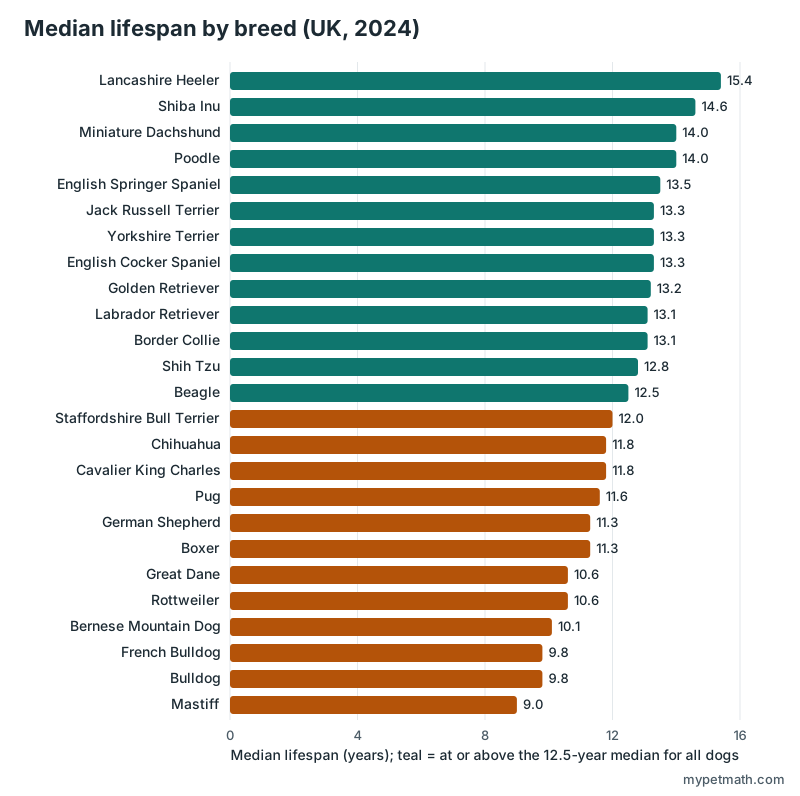
Dog life expectancy by breed
Here are popular breeds from the same dataset. These are medians, so plenty of dogs beat them and some fall short.
| Breed | Median lifespan |
|---|---|
| Lancashire Heeler | 15.4 years |
| Shiba Inu | 14.6 years |
| Miniature Dachshund | 14.0 years |
| Poodle | 14.0 years |
| English Springer Spaniel | 13.5 years |
| Jack Russell Terrier | 13.3 years |
| Yorkshire Terrier | 13.3 years |
| English Cocker Spaniel | 13.3 years |
| Golden Retriever | 13.2 years |
| Labrador Retriever | 13.1 years |
| Border Collie | 13.1 years |
| Shih Tzu | 12.8 years |
| Beagle | 12.5 years |
| Staffordshire Bull Terrier | 12.0 years |
| Chihuahua | 11.8 years |
| Cavalier King Charles Spaniel | 11.8 years |
| Pug | 11.6 years |
| German Shepherd | 11.3 years |
| Boxer | 11.3 years |
| Great Dane | 10.6 years |
| Rottweiler | 10.6 years |
| Bernese Mountain Dog | 10.1 years |
| French Bulldog | 9.8 years |
| Bulldog | 9.8 years |
| Mastiff | 9.0 years |
Source: Dogs Trust 2024 breed table (companion data to McMillan et al.). UK dogs; breeds with enough records only.
Two things jump out. Giant breeds sit near the bottom, which fits what vets have long seen. And the flat-faced breeds (French Bulldog, Bulldog, Pug) do worse than their size alone would suggest. Both French Bulldogs and Beagles land in the medium group in our calculator, yet the Frenchie’s median lifespan is almost three years shorter.
What is that in human years?
Lifespan numbers feel abstract until you convert them. Our dog age calculator uses the AAHA size-based chart, so here is what a typical lifespan looks like for four dogs:
| Dog | Size in the calculator | Median lifespan | In human years |
|---|---|---|---|
| Miniature Dachshund, 4.5 kg (10 lb) | Small | 14.0 years | about 72 |
| Labrador, 30 kg (66 lb) | Large | 13.1 years | about 83 |
| French Bulldog, 12 kg (26 lb) | Medium | 9.8 years | about 59 |
| Great Dane, 55 kg (121 lb) | Giant | 10.6 years | about 83 |
So a Great Dane and a Labrador can reach roughly the same “human” age, but the Dane gets there about two and a half years sooner. That’s why the giant breeds count as seniors from about age 6, and why our post on when a dog is considered a senior gives different ages by size.
Why do big dogs die younger?
Across mammal species, bigger animals usually live longer: elephants outlive mice. Within dogs it runs the other way, and the 2024 study found large breeds had a faster time to death than small ones in both sexes. Nobody has a complete explanation yet. What we can say is practical: if you have a big dog, start senior check-ups earlier. AAHA defines a dog as senior in the last 25% of its expected lifespan, so a breed with a 10-year median hits that stage at about 7 and a half.
What actually helps a dog live longer?
We can’t pick our dog’s genes, but a few things are in our hands.
Keep them lean. This is the one with the strongest evidence. In a lifetime study by Kealy and colleagues, Labrador Retrievers fed 25% less than their littermates had a longer median lifespan, and chronic problems like osteoarthritis showed up later. Meanwhile, APOP’s 2022 survey found 59% of dogs seen by vets were overweight or obese. Our post on whether your dog is overweight walks through the rib check, and the dog weight loss calculator turns a body score into a daily calorie target.
Feed for the dog you have, not the bag. Feeding guides on bags are generous. A 9 kg Beagle that lies on the sofa most of the day needs far less than one that runs every morning. The dog calorie calculator gives a starting number you can adjust.
Choose breeds and breeders carefully. If you’re still picking a dog, the breed table above is worth a look, along with health testing from the breeder. Extreme flat faces and very large size both come with shorter median lives in this data.
Don’t skip the vet as they age. Many of the problems that shorten lives are easier to manage when they’re caught early.
How accurate are these numbers?
Fair question. The data come from 18 UK organizations, including rehoming charities, breed registries, pet insurers, vet groups and university archives, so they may not match dogs in other countries exactly. Rare breeds were left out if there weren’t enough records. And a median is a midpoint, not a promise: some Frenchies reach 14 and some Lab mixes don’t see 10. Use the numbers to plan, not to predict your own dog’s life.
When to call your vet
Age isn’t a disease, but these changes in an older dog deserve a visit:
- weight loss you didn’t plan, or a sudden change in appetite
- drinking or peeing much more than usual
- new lumps, or lumps that grow or change
- stiffness, limping or reluctance to climb stairs or jump in the car
- coughing, tiring quickly on walks or breathing harder at rest
- confusion, getting stuck in corners or new accidents in the house
Big and flat-faced breeds are worth taking in for a senior-style check a little earlier than you might think. Our dog years to human years guide explains the life stages in more detail, and if you share your home with a cat, here’s how long cats live.
Frequently asked questions
What is the average lifespan of a dog?
About 12.5 years. That is the median from a 2024 study of 584,734 dogs in the UK, which means half the dogs in the study lived longer and half lived less.
Do mixed breeds live longer than purebreds?
Not in the biggest recent study. Crossbreeds had a median of 12.0 years and purebreds 12.7, though the gap varies hugely by breed. About a quarter of breeds lived shorter lives than crossbreeds and almost half lived longer.
Do female dogs live longer than males?
Slightly. In the same UK data, females had a median lifespan of 12.7 years and males 12.4.
Which dog breeds live the longest?
Among breeds with enough data, the Lancashire Heeler (15.4 years), Tibetan Spaniel (15.2), Shiba Inu (14.6) and Papillon (14.5) topped the list in the 2024 UK study. Miniature Dachshunds and Poodles came in at about 14.
Can I make my dog live longer?
You can’t change genes, but keeping your dog lean helps. In a lifetime study of Labrador Retrievers, dogs fed 25% less than their littermates lived longer and developed chronic conditions such as osteoarthritis later.
Calculators for this topic
Sources
- McMillan KM, Bielby J, Williams CL, et al. Longevity of companion dog breeds: those at risk from early death. Scientific Reports 2024;14:531 (584,734 UK dogs; medians by size, sex, skull shape and 155 breeds). nature.com
- Dogs Trust. Life expectancy of breeds table (2024), companion data for McMillan et al.: median lifespan and 95% confidence interval for 155 breeds and crossbreeds. dogstrust.org.uk
- Kealy RD, Lawler DF, Ballam JM, et al. Effects of diet restriction on life span and age-related changes in dogs. JAVMA 2002;220:1315–1320. doi.org
- Creevy KE, et al. 2019 AAHA Canine Life Stage Guidelines (senior = last 25% of estimated lifespan). aaha.org
- Association for Pet Obesity Prevention. 2022 Pet Obesity Prevalence Survey (59% of dogs overweight or obese). petobesityprevention.org
Vet disclaimer: These are estimates for healthy pets. Your vet knows your pet. Ask them before changing diet or care, especially for puppies, kittens, seniors, pregnant pets or pets with health conditions. Read our medical disclaimer.